


In early 2020, Todd Wenzel was teaching a class at the Oshkosh Correctional Institution on the rights and responsibilities of renters for people getting close to their release date. That’s when the institution’s reentry social worker came to Wenzel, the Winnebago County UW–Madison Extension Human Development & Relationships educator. Inmates were asking for help navigating their finances before they left the facility and the staff did not have the knowledge or resources to effectively assist them.
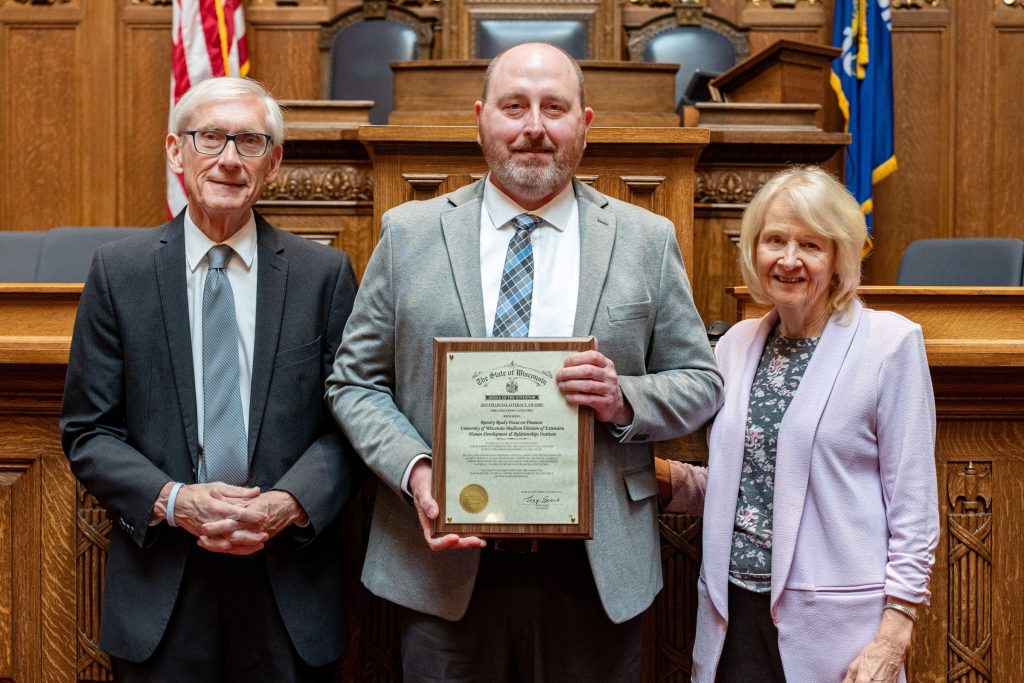
In response, Wenzel and his colleagues at UW–Madison Extension developed the Reentry Ready: Focus on Finances program. They were honored for their accomplishment with the 2025 Wisconsin Governor’s Financial Literacy Award at the Capitol in early April.
The eight-module class was piloted in October of 2022 — when pandemic protocols allowed Wenzel to teach in facilities again. Reentry Ready: Focus on Finances is now taught by seven Extension educators in four county jails and four Wisconsin Department of Corrections facilities. Since the first class in 2022 through December 2025, 414 incarcerated people have completed the class series.
People who have been incarcerated often need help successfully navigating the process of returning to public life. When people don’t transition successfully, rearrest, reconviction and reincarceration often occur. The cost of recidivism is especially high in Wisconsin. In 2021, the costs associated with recidivism in Wisconsin were over $426 million, or $72 per state resident.
Participants in Reentry Ready vary in the time that they have been incarcerated, from less than one year to 25 years or more. A lot can change in the world in that time.
“The financial world is different. Just having someone understand how to look at their bank account and their balance on a smartphone app — when we talk about paying bills online, that is foreign to them,” Wenzel says.
The hands-on modules cover personal finances — everything from debt and checking credit scores to paying bills, getting mortgages, and retirement. They’re also tailored to the needs of participants.
“A lot of people come out of a facility with justice system debt — court-ordered fees. A really common one is back child-support payments,” Wenzel said. “So understanding that and figuring out how you’re going to pay your bills, figuring out your income and credit — a lot of people that have been incarcerated are often victims of identity theft and financial frauds. We talk all about how to find the resources they need.”
Word of mouth spreads quickly — there are waitlists at facilities across the state to take part in Reentry Ready: Focus on Finances. By building relationships with social workers, the Reentry Ready team tailors each program to the needs of the participants.
The team at Extension also collaborated on a web page of Reentry Ready Resources for people who are recently released. The page includes an action plan and checklist with considerations for housing, work, and legal and insurance needs. There are 28 county guides with each county’s specific procedures and resources. These include addresses and contact information for community providers and government agencies that can help them reenter the community after incarceration.
Reentry Ready: Focus on Finances has recently expanded to include a post-release follow-up with participants of the class. That way, Extension educators can see which skills and information were the most helpful to participants.
Congratulations to Wenzel and the Reentry Ready: Focus on Finances team: Katie Gellings, Amanda Kostman, Jeanne Walsh, Tahnee Aguirre, Sarah Hawks, Jonathon Ferguson, Ronda Davis and Jenny Abel.